
Rear damage needs a structural check
iPhone Back Glass Replacement Auckland
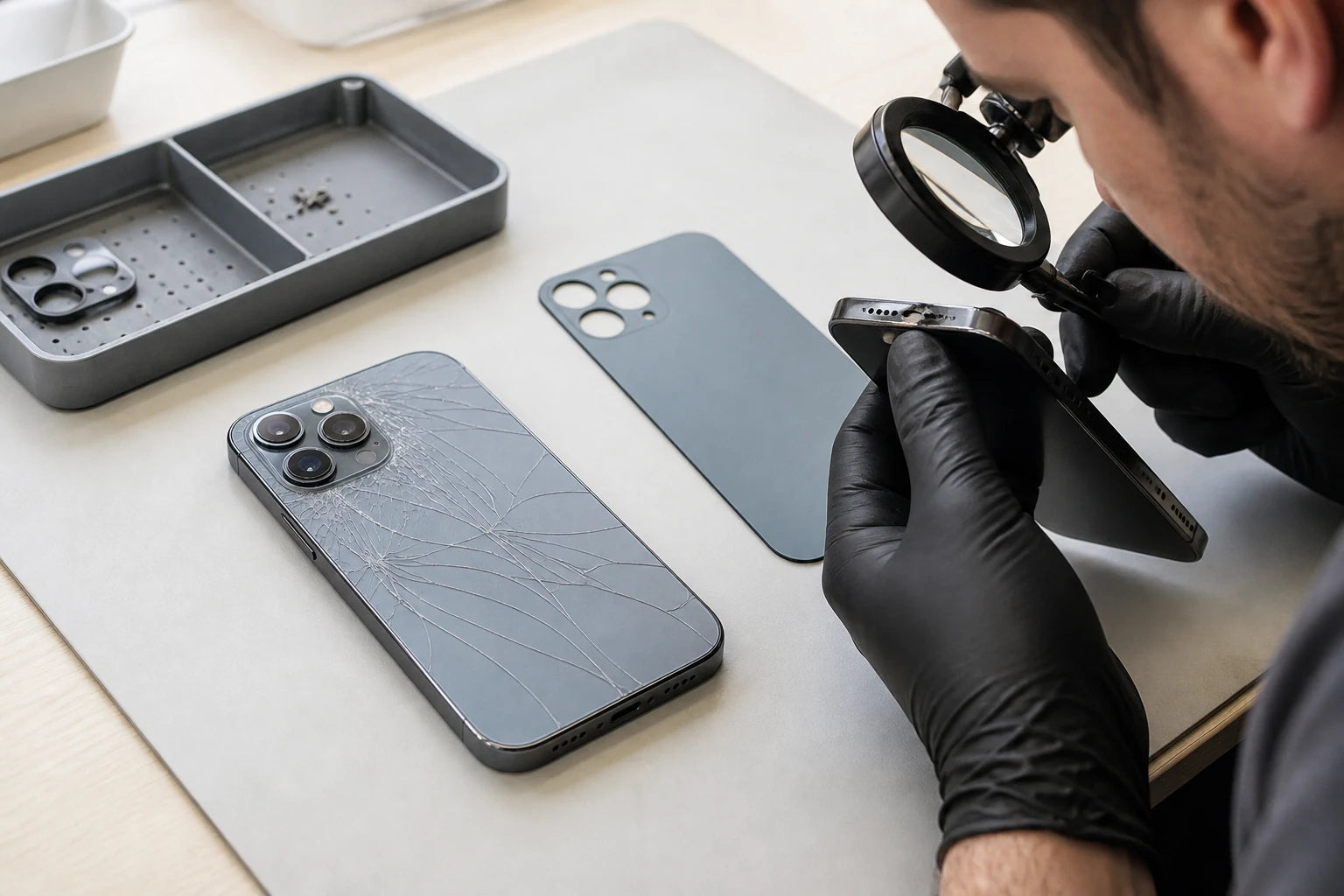
The rear of an iPhone can have cracked glass, a separate broken camera-lens cover, a bent frame or damage to wireless charging and internal parts. Those conditions may look similar in a photo but do not share one repair. MoboPlus assesses the impact area and exact model before recommending supported work.
Answer first
What to know before choosing a repair
For cracked iPhone back glass in Auckland, bring the phone to MoboPlus in Westgate for a physical assessment. We distinguish rear-glass damage from a broken camera-lens cover, bent housing and deeper impact damage, then confirm the repair route, quote factors and limitations for the exact model.
01 · Handle it carefully
Sharp glass and a damaged battery area require caution
Loose rear-glass fragments can cut skin and allow dust or liquid closer to internal components. Avoid rubbing the damaged surface or putting the phone into a pocket where pressure can release more pieces. Keep it away from children and do not continue using a badly shattered phone as if the damage were purely cosmetic.
Stop charging and using the phone if it is bent, unusually hot, swollen, gives off an odour or shows a widening gap. Do not apply heat, solvents, clamps or do-it-yourself laser methods. Battery safety and the condition of the frame take priority over appearance.
- Use a stable case only if it fits without pressure and no battery warning sign is present.
- Avoid liquid exposure and do not test the original water-resistance claim.
- Tell us if wireless charging, cameras, flash, buttons or signal changed after the impact.
- Photograph the phone before loose glass worsens if this can be done safely.
02 · Identify the damaged structure
Back glass, camera lens or housing?
The repair scope is determined by the exact damaged component and the model construction, not by the general phrase “broken back”.
| What you can see | What may be damaged | What else to inspect |
|---|---|---|
| Cracks spread across the rear panel | Rear-glass area or rear assembly | Edges, wireless charging, buttons, cameras and signs of internal impact |
| Small ring of glass over one camera is broken | External camera-lens cover rather than the camera module | Dust, focus, flare, camera image and nearby rear glass |
| Side rail is dented or phone no longer sits flat | Housing/frame deformation | Screen fit, button movement, cameras, battery and internal pressure |
| Camera image shakes, blurs or stays black after impact | Camera module, lens cover, connector or frame pressure | Test every camera view, focus, flash and video separately |
| Wireless charging stopped after rear damage | Alignment, rear assembly, charging coil or broader impact fault | Known-working charger and an internal assessment before glass-only work |
03 · Choose by damage, not price label
Rear glass, housing or camera-area repair
Construction differs across iPhone generations. A route available for one model may not be appropriate for another, and frame condition can change an otherwise straightforward job.
Rear-glass-focused repair
- Often fits when
- Damage is confined to the supported rear-glass area and the housing, cameras, battery and wireless charging remain serviceable.
- Check first
- Ask how the exact model is handled, what surface and function checks follow, and what sealing limitations remain.
Rear housing or frame route
- Often fits when
- The side rail is bent or dented, buttons are misaligned, or the rear structure cannot support a glass-only approach.
- Check first
- Housing work is broader and can affect the repair scope. Existing screen, battery and camera condition should be documented first.
Camera-lens or module assessment
- Often fits when
- Damage is concentrated around a camera or image quality changed after the drop.
- Check first
- An external lens cover and an internal camera module are different components. One should not be replaced merely because the other is damaged.
04 · Model-specific assessment
What happens before rear-glass work is approved
Photos help with initial triage, but bends, gaps, loose glass, camera performance and internal effects need direct inspection.
-
Identify the exact model
Rear construction and repair options vary between generations and size variants. We confirm the model before discussing availability or scope.
-
Map the impact
We distinguish rear glass, camera-lens cover, side frame and screen-edge damage, and ask whether the phone was dropped again after the first crack.
-
Check affected functions
Cameras, flash, buttons, charging and wireless charging where supported provide evidence about damage beneath the visible glass.
-
Agree the practical route
The proposed repair, quote, part availability and known limitations are explained. Broader housing or internal damage is treated separately.
-
Inspect fit and function after work
The rear finish, edge fit and relevant functions are checked against the intake condition. The result should not be represented as factory water resistance.
05 · Collection check
Look beyond the new rear surface
A cosmetic inspection is useful, but the impact may have involved functions around the camera or charging system. Test what changed when the phone was dropped.
Physical checks
- Rear surface and edges sit consistently without a new gap.
- No loose glass remains around the camera or frame.
- Buttons move normally and the phone rests as expected on a flat surface.
- Existing dents, screen damage or unrelated marks remain documented.
Functional checks
- Each rear camera focuses and records video without new artefacts.
- Flash operates where it was testable before repair.
- Wired and supported wireless charging are checked if impact affected that area.
- Signal, sound or other reported post-drop symptoms are revisited.
06 · Plain-language expectations
What rear-glass repair can—and cannot—promise
Accurate content separates appearance, structure, sealing and internal function rather than claiming one cosmetic repair restores all four.
Appearance can improve without erasing device history
A repaired rear surface does not change the fact that the phone experienced impact. Keep the repair record and disclose the history if the device is later sold.
Water resistance is not guaranteed
Age, cracks, a bent frame, earlier opening and replacement materials affect sealing. Avoid deliberate liquid exposure after repair.
Data should still be backed up
Rear work is not intended to erase storage, but impact damage and device disassembly carry uncertainty. Maintain an independent backup whenever possible.
A broken lens cover may hide camera damage
Replacing external glass cannot correct an internal focus, stabilisation, sensor or connector fault. Camera testing determines whether separate work is needed.
Quote clarity
Why the exact model and fault matter
We do not publish a made-up universal price. A useful quote depends on the device, part path, condition and what a careful assessment shows.
- Exact iPhone model and rear construction
- Rear glass, camera-lens cover or housing damage
- Frame bends, missing glass and sharp exposed areas
- Camera, flash, button and charging symptoms after impact
- Supported repair route and part availability
Questions answered
iPhone Back Glass FAQ
Clear, conditional answers are more useful than promises that ignore the model or damage.
Is iPhone back glass the same as the camera lens glass?
No. The rear panel surrounds the camera area, while each external camera-lens cover protects a lens opening. Either can break independently, and image problems may also involve the internal camera module.
Can I keep using an iPhone with cracked rear glass?
Minor cracks may seem cosmetic, but loose sharp pieces, liquid entry, a bent housing or battery symptoms make continued use risky. Protect the phone from pressure and liquid and arrange an assessment.
Will rear-glass replacement restore water resistance?
It should not be promised. Impact, age, frame condition, earlier opening and repair materials all affect sealing. Treat the repaired iPhone as not suitable for deliberate liquid exposure.
Does a bent iPhone need more than back glass?
Possibly. A distorted housing can affect screen fit, buttons, battery clearance, cameras and the ability to support a rear-glass route. The frame should be assessed before the repair is quoted.
Will my data be erased during back-glass repair?
The purpose of rear-glass work is not to alter storage, but no physical repair replaces a backup. Impact and other hidden damage can make a phone unstable, so back up important data whenever possible.
How do I get a back-glass quote in Westgate?
Send the exact iPhone model and clear photos of the rear, camera area and side frame, and describe any changed functions. Final scope may require inspection at MoboPlus, Shop 2/12 Maki Street.
MoboPlus · Westgate
Bring the exact model and the full story of the fault
Shop 2/12 Maki Street, Westgate Shopping Centre, Massey, Auckland 0814Open the verified Google Maps location
09 688 2610 · moboplusnz@gmail.com
- Monday–Saturday
- 10:30–18:00
- Sunday
- 10:30–17:00
Content reviewed 27 August 2026. Service and parts remain subject to exact-model assessment and availability.